Monday, July 17, 2006

"United - yeah!"

Hayley and I are both Manchester United fans and she is determined that Oliver should be too, not least because I pay a small fortune (£741 to be precise) for my season ticket each year in the hope that one day I'll be able to take Oliver along with me.

Over the weekend Hayley tried to teach Oliver to raise his hands in the air and cheer when when she says "United - yeah!". This morning as I made his morning porridge she had got him waving his hands on cue. She was absolutely delighted with this! Just need to add the cheering now.

Roll over Beethoven

Oliver has been able to crawl for a while, but interestingly we have never seen him roll over from his back to his front. Even after starting to crawl he has occasionally ended up with his arm trapped under himself and cried for our assistance. And we have never yet come into his room and found him standing up, because it would need him to roll from his back to his front.

So this weekend Hayley occasionally placed him on his side and encouraged him over to his front from where he was able to get onto all fours quite happily.

This morning we got him up and brought him into our room where we lay him on his back on the bed. After a few minutes he spotted something of interest on the bedside table. Quite un-prompted, he rolled onto his side and then his front and finally up onto his hands and knees. He looked pleased, if a little surprised, when this got him a round of applause.

Thursday, July 13, 2006

No entry!


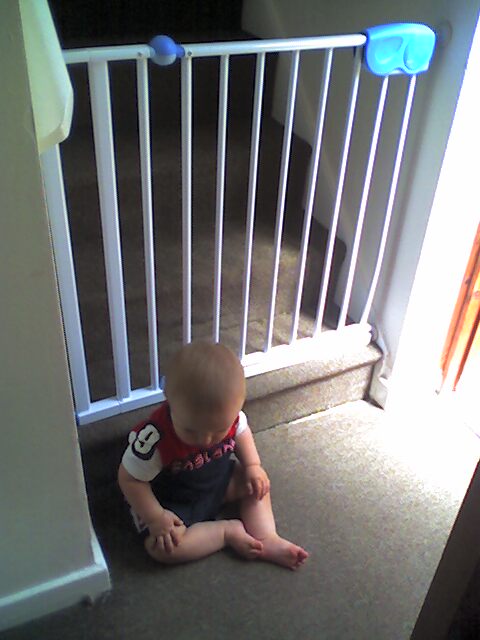
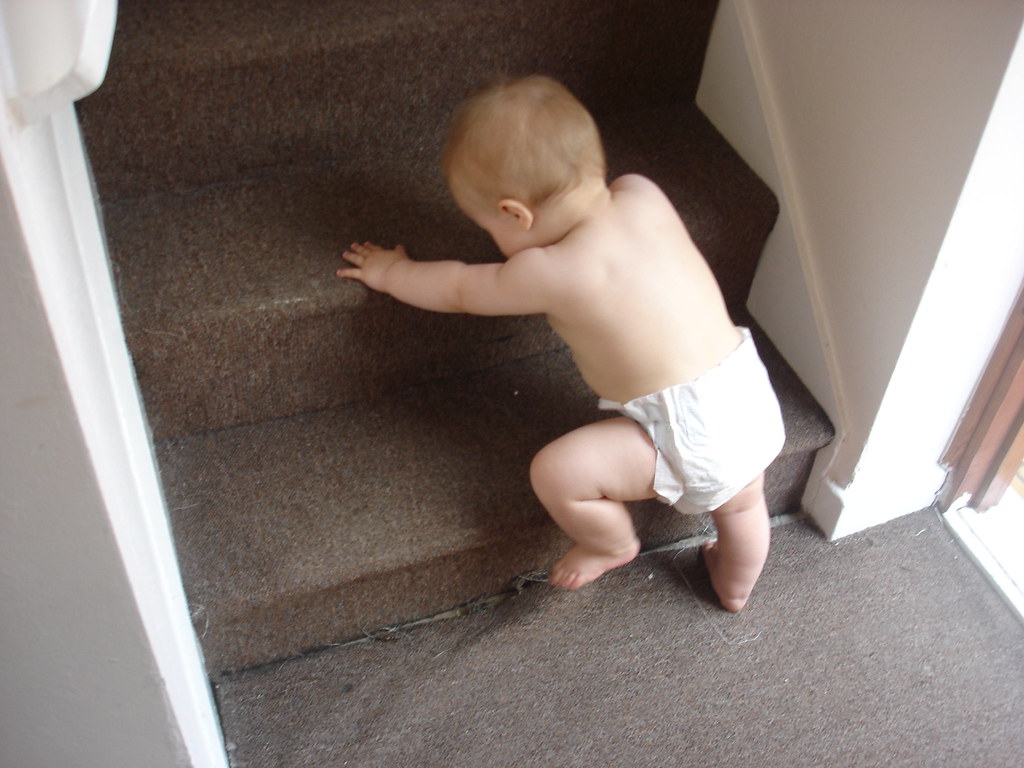
Oliver plans his next move after Hayley blocked access to the stairs, just as he was ready for his first expedition.

BBC NEWS | Health | IVF 'need for father' rule may go

BBC NEWS | Health | IVF 'need for father' rule may go

Who's the Daddy! Well, erm, no-one apparently.

While I don't want the role of fathers to be undervalued or undermined, I can see why this is a move to a more even-handed attitude to fertility treatment. It would be lovely (if a little regimented) if every child could be brought up in a conventional and loving nuclear family. But the nuclear family brings no absolute guarantee of love or happiness, so perhaps a better criteria is simply whether or not the child will be born into a loving family, regardless of how big or small that family might be.

BBC NEWS | Health | Solo living 'doubles heart risk'

BBC NEWS | Health | Solo living 'doubles heart risk'

Contrary to all those jokes about marriage ("Take my wife... Please take my wife!") it seems that living alone is more detrimental to ones health.

Wednesday, July 12, 2006

Ice-cream in the park


"I'm getting the hang of this ice-cream stuff now Mummy."

Neonatal units are in crisis, says charity Bliss

Crisis in neonatal units
(From the BBC website).

Premature baby charity Bliss has said a crisis in the care of babies in neonatal units is deepening.

One area of specific concern that the charity has highlighted is the number of babies who are being transferred - sometimes hundreds of miles - between hospitals because of staff or cot shortages.

Nicola Eardley, from Norfolk, experienced this first-hand when she gave birth to her son Charlie nearly three years ago.

In the 26th week of her pregnancy, Nicola noticed her baby was very still, so travelled to her local hospital, the Norfolk and Norwich University Hospital, where she had planned to give birth, to see what was wrong.

"Throughout the day they did lots of scans and discovered that his heart was failing and the placenta had failed. They told me he had to be delivered today," she said.

"But then the other bombshell came that although he had to be delivered, they had no incubators free.

"So we had to go home, get some stuff and come back, and within 10 minutes of being back at the hospital we were put in an ambulance and sent off to Nottingham."

Nottingham City Hospital is about 150 miles from Norwich - it took about three and a half hours to get there.

When she arrived her baby, who she called Charlie, was delivered by caesarean. At only 26 weeks, he was very tiny; he weighed just 660g (1lb 7oz).

"In the first few days Charlie did very very well. But then he got NEC - Necrotizing Enterocolitis - a condition that affects the bowels. Some babies need to have part of their bowels removed and it does kill an awful lot of premature babies," she said.

"But we were lucky enough that the antibiotics did the trick for Charlie."

Stressful experience

Charlie spent five weeks at the neonatal unit at Nottingham. Nicola said the hospital staff were "fantastic" because they gave her and her partner a room in the unit so they could stay with their son.

But the distance from home still caused problems, and Nicola had to arrange for relatives to look after her other three children, at the time all under the age of 10.

When an incubator was available back at Norwich and Charlie was well enough to be transferred, the family embarked on the trip back to their local hospital.

But, Nicola said, the change in hospitals was also problematic.

"Norwich were fantastic as well, it's just that they had different routines and protocols, so it was a completely different set up to what we had got used to."

Eventually, after spending about 15 weeks in hospital, Charlie was finally allowed home. Now two, Nicola says Charlie is a bundle of energy, but he does still have some problems.

"He cannot eat and is fed by a gasterostomy tube, and he is also still on oxygen when he is asleep.

"But other than that he runs about like any other child."

Although Nicola says the whole situation was incredibly stressful, she is not angry because the team at Nottingham saved her son's life.

"But what would have happened if Nottingham hadn't had a free incubator?" she wonders.

Tuesday, July 11, 2006

Nap time


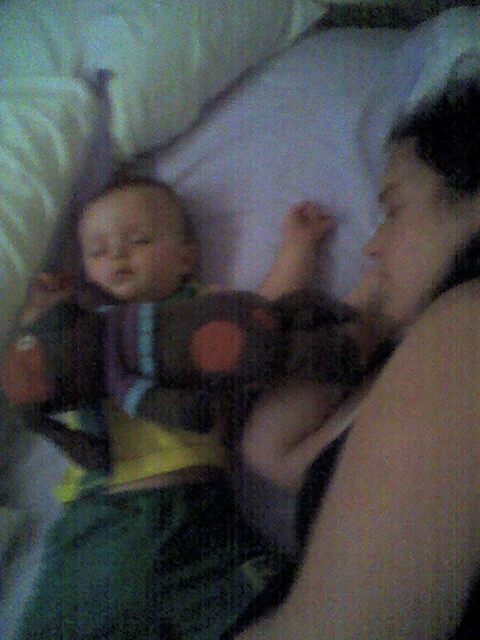
Sometimes Oliver won't have his afternoon nap unless his Mummy joins him. This is how I found my family when I came home today.

33 Things kids Should Do Before They're 10

33 Things kids Should Do Before They're 10

Hayley found this list of 33 things a child should do before they are 10 years old. Number 27 sounds a tad tricky. Number 33 probably violates health and safety legislation these days. And surely number 32 is missing the words "every weekend" at the end. (Well, I can dream.)

1. Roll on your side down a grassy bank
2. Make a mud pie
3. Make your own modelling dough mixture
4. Collect frogspawn
5. Make perfume from flower petals
6. Grow cress on a windowsill
7. Make a papier mâché mask
8. Build a sandcastle
9. Climb a tree
10. Make a den in the garden
11. Make a painting using your hands and feet
12. Organise your own teddy bears' picnic
13. Have your face painted
14. Play with a friend in the sand
15. Make some bread
16. Make snow angels
17. Create a clay sculpture
18. Take part in a scavenger hunt
19. Camp out in the garden
20. Bake a cake
21. Feed a farm animal
22. Pick some strawberries
23. Play pooh sticks
24. Recognise five different bird species
25. Find some worms
26. Ride a bike through a muddy puddle
27. Make and fly a kite
28. Plant a tree
29. Build a nest out of grass and twigs
30. Find ten different leaves in the park
31. Grow vegetables
32. Make breakfast in bed for your parents
33. Make a mini assault course in your garden

Sunday, July 09, 2006

Happiness lessons for all

An article from today's Independent on Sunday. Although talk of a "Happiness Tsar" sounds vaguely (and ironically) totalitarian, it still strikes me as an exercise worth trying.

---

Happiness lessons for all

Schoolchildren will take self-esteem classes to raise standards and cut crime. US guru called in to pioneer radical scheme that could enter the school curriculum

By Sophie Goodchild, Chief Reporter
Published: 09 July 2006

Lessons in happiness are to be introduced for 11-year-olds in state schools to combat a huge rise in depression, self-harm and anti-social behaviour among young people.

Special behavioural techniques imported from the US will be used from September next year in an attempt to make children more resilient in the face of the pressures of 21st century living.

Professor Martin Seligman, from the University of Pennsylvania, one of the most influential psychologists of his generation, has been drafted in to train British teachers so that they can deliver classes to nearly 2,000 secondary school pupils.

Lessons using cognitive behavioural therapy techniques will include role play designed to help children build up their self-esteem, challenge negative ways of thinking and express their thoughts clearly. Trials have shown that the techniques can boost class performance and exam results.

They will also be shown special breathing exercises to keep them calm when their parents are arguing and avoid blaming themselves for situations that are beyond their control, for example, the fact their parents may be divorcing.

The anti-depression classes, due be introduced in South Tyneside, Manchester and one rural location, have been approved by Lord Layard, the Government's "happiness" tsar.

The Department for Education is expected to evaluate the programme. If it proves as successful as it has been in the US, happiness classes could become part of the regular school timetable. The move comes as experts warn that record numbers of young people are on the verge of mental breakdown as a result of family break-up, exam pressures and growing inability to cope with the pressures of modern life.

Figures show that at least 10 per cent - three children in every average-sized class of 30 in the country - are experiencing symptoms of severe depression, including suicidal thoughts, prolonged bouts of despair and the urge to cry on a daily basis. Twenty-five years ago the average age people fell ill with depression was 30. Today this has fallen dramatically with 14 the age at which mental illness first strikes.

David Cameron, the Conservative leader, will tomorrow highlight the need for professionals to pay attention to the emotional development of young people in an attempt to turn them away from offending. In a speech to the Police Foundation, he will say that children are not "feral" and instead need "love" to restore their health and happiness.

Wellington College in Berkshire this year became the first private school to pioneer positive-thinking teaching for 13-year-olds. But this new initiative is the first time such a comprehensive programme, which can also be used by parents, has been used in the state sector.

Mental health charities say that teachers are placing too much focus on disruptive pupils and ignoring the needs of those who do not cause trouble but suffer emotional distress.

Lee Miller, a spokesman for Young Minds, said: "Historically schools have been focused on children who misbehave because they will disrupt the whole class."

Lessons in happiness are to be introduced for 11-year-olds in state schools to combat a huge rise in depression, self-harm and anti-social behaviour among young people.

Special behavioural techniques imported from the US will be used from September next year in an attempt to make children more resilient in the face of the pressures of 21st century living.

Professor Martin Seligman, from the University of Pennsylvania, one of the most influential psychologists of his generation, has been drafted in to train British teachers so that they can deliver classes to nearly 2,000 secondary school pupils.

Lessons using cognitive behavioural therapy techniques will include role play designed to help children build up their self-esteem, challenge negative ways of thinking and express their thoughts clearly. Trials have shown that the techniques can boost class performance and exam results.

They will also be shown special breathing exercises to keep them calm when their parents are arguing and avoid blaming themselves for situations that are beyond their control, for example, the fact their parents may be divorcing.

The anti-depression classes, due be introduced in South Tyneside, Manchester and one rural location, have been approved by Lord Layard, the Government's "happiness" tsar.

The Department for Education is expected to evaluate the programme. If it proves as successful as it has been in the US, happiness classes could become part of the regular school timetable. The move comes as experts warn that record numbers of young people are on the verge of mental breakdown as a result of family break-up, exam pressures and growing inability to cope with the pressures of modern life.

Figures show that at least 10 per cent - three children in every average-sized class of 30 in the country - are experiencing symptoms of severe depression, including suicidal thoughts, prolonged bouts of despair and the urge to cry on a daily basis. Twenty-five years ago the average age people fell ill with depression was 30. Today this has fallen dramatically with 14 the age at which mental illness first strikes.

David Cameron, the Conservative leader, will tomorrow highlight the need for professionals to pay attention to the emotional development of young people in an attempt to turn them away from offending. In a speech to the Police Foundation, he will say that children are not "feral" and instead need "love" to restore their health and happiness.

Wellington College in Berkshire this year became the first private school to pioneer positive-thinking teaching for 13-year-olds. But this new initiative is the first time such a comprehensive programme, which can also be used by parents, has been used in the state sector.

Mental health charities say that teachers are placing too much focus on disruptive pupils and ignoring the needs of those who do not cause trouble but suffer emotional distress.

Lee Miller, a spokesman for Young Minds, said: "Historically schools have been focused on children who misbehave because they will disrupt the whole class."

It's official: he's crawling

Oliver has been crawling in a slightly lob-sided way for a while now, but he has now officially made the transfer to proper crawling on hands and knees (even if he reverts to using a foot occasionally).

Yesterday Oliver was playing in the living room while I sat on the floor in the adjoining kitchemn, sorting washing. After a few moments, Oliver appeard on hands and knees at the door witha big grin on his face, having crawled across the living room, around the sofa and up to the kitchen door. When he saw me sitting there he laughed. I'm sure his laughter was partially at the new sensation of having travelled somewhere under his own steam and being the person coming into the room rather than the person waiting for someone to come in. I remember the first time I drove a car with no-one else in the car. The feeling of freedom was all the more intoxicating for its newness. I'm sure Oliver was feeling much the same thing.

Saturday, July 08, 2006

Hayley and Oliver at Room 311

Tuesday, July 04, 2006

On the up!


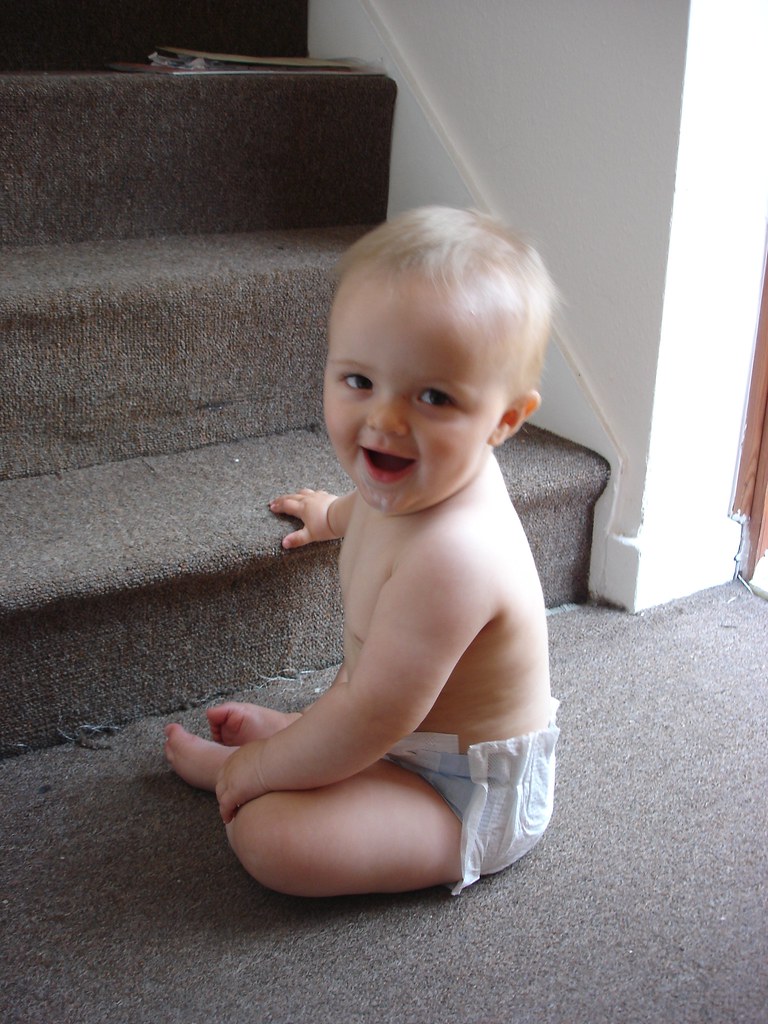
Oliver looks suspicious at the bottom of the stairs...


...then moves into his customary "one foot and one knee" crawling position...


...before inspecting the day's post...


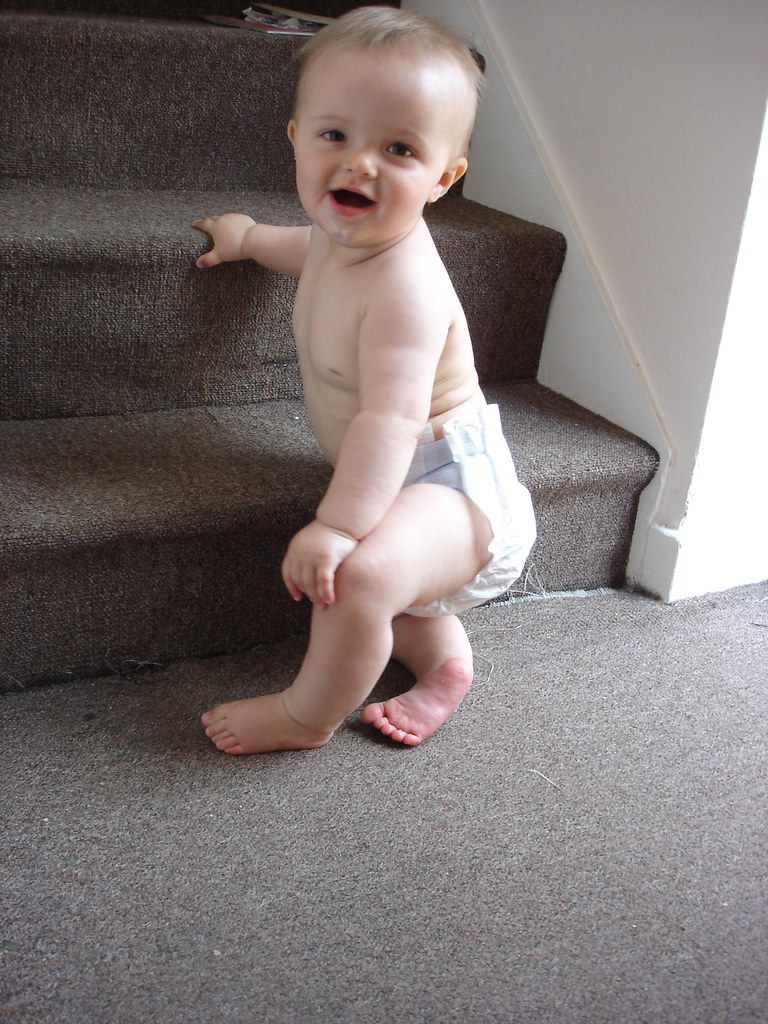
..and finally realising he can climb these "stair" things!
Time to buy a stair gate I think!

Monday, July 03, 2006

The joys of cycling (according to the FT)

I'm cheekily re-producing this article (below) from today's Financial Times because it sums up the rewards of cycling to work.

I have been keeping a record of how often I cycle to work and since the clocks went forward I have commuted by bike an average of 2 days out of every 3. Given that (ironically) I sometimes drive to work so that I can get to my off-road cycling venue more quickly in the evening, I don't think that's a bad average, but it certainly leaves room for improvement.

Of course, one of my main motivations is to stay fit and active for my 9 month old boisterous bundle. I can't wait until he can come out with me along the Trans-Pennine Trail or in the Peaks. Though I'm in no rush to see him taking on the traffic on my commute!

---

Pleasures outweigh the perils of a more balanced commute

By Lucy Kellaway

Published: July 3 2006 03:00 | Last updated: July 3 2006 03:00

One of the greatest thrills you can have as a needy journalist is discovering that the stranger sitting next to you on the train is avidly reading something you wrote in that morning's newspaper. In 20-odd years I have had such a thrill twice, each time glorious enough to be worth a decade's wait.

Alas, this pleasure is no longer available to me: 18 months ago I gave up the train and now cycle to work instead. However, the other day something even more gratifying (and odder) happened on my bike on the way to work. I had stopped at traffic lights beside a fine looking man in an expensive suit not designed for cycling. We looked at each other, looked away and then he looked back at me intently. This sort of thing never happens to me these days (if it ever did) and particularly not when I'm wearing an oversized, fluorescent, road sweeper's tabard and garish cycling helmet.

Then he said: "I'm riding my bike today because of your article in the paper." The lights turned to green, and off he went.

This was joyous. It was also puzzling as I hadn't written about cycling: I had written about being middle-aged. Still, he had read an article of mine and had been converted to cycling as a result.

It made me think: if I can convert one man without even trying, think how many more I can convert if I put some effort into it.

So today I have come up with 10 excellent reasons why cycling to work would be a very good idea for you. It will make you richer, healthier, possibly thinner and definitely less bonkers. It will help you make new friends, it will make you feel virtuous, it will give you more spare time. You will be more productive at work and you'll also save the planet. If you are in your mid forties, you will lose a quarter of a century instantly and feel just like an undergraduate again.

This is a very impressive list of benefits, you must agree. In fact

I defy anyone to name any other change to the working day that could be so beneficial in so many ways as commuting by bike.

Admittedly one can get a bit sweaty when cycling, and one can also get killed, but I'll come to these drawbacks in a minute.

By far the biggest advantage for me is what my bike does to my spirits. Every day I am calmed and cheered by my ride. Cycling is the perfect buffer between work and home. You have to concentrate when you are cycling, which means you can't think much, and you can't fret - neither about the children's missed dentist appointments nor that half-baked column. Instead I often sing as I cycle. Today it was the Chris Isaak song "Wicked Game".

The other great beauty of cycling is its efficiency. My commute is five minutes quicker than the train and costs £80 less a month. I never

have to wait, I never have to be crammed up against other people's bodies at rush hour. Neither do I ever have to go to the gym, spending hundreds of pounds a year and many wasted hours on those awful machines.

(In truth I never went to the gym anyway, which means that cycling has made me fit for the first time in my life, which is nice, if strange.)

I cycle quite fast now and so occasionally overtake young men wearing all the kit on Southwark Bridge, which gets the morning off to an agreeably competitive start.

If your employer has a bike shed then you will find you make new friends as you lift your bike into the racks every day. You have nice little undemanding chats about the traffic and the weather - which are the sort of thing that make office life so reassuring.

Now for the two main shortfalls. The first is sweat, which a lot of people tell me is what prevents them from getting on their bikes. Speaking personally, I don't find this much of a problem. I cycle in high heels, lipstick and normal office clothes and go straight from the bike sheds to my desk neither unduly soggy nor dishevelled.

I noticed one young City banker cycling along Cheapside last week looking cool in a beautiful double-cuffed pink shirt and Church's brogues, with one pinstriped trouser leg pulled up to save it from getting stuck in the chain, revealing a touchingly white hairy calf.

For nerdier, sweatier cyclists who insist on doing their brief commute dressed for the Tour de France, most big offices have showers so that they can peel off their clinging garments, wash and put on something more suitable.

There is finally the question about getting killed. Cyclists are bundles of soft tissue who don't have much chance when up against one of those massive bendy buses. Cycling is dangerous, and you are very silly if you cycle without a helmet and all the safety gear.

Yet despite the risk, I hardly ever feel frightened on my bike. I feel alert and alive, but not scared. Recently

I was cycling out one hot evening to give a speech to some businesspeople. I was feeling fine about the ride, but not fine about the impending talk. On the way, I was nearly hit by a passenger door being flung open, swerved and narrowly avoided a van.

I put the thought to myself: how come I'm not frightened of being crushed to death but I'm terrified of minor humiliation in front of a small audience of civilised people?

Suddenly I wasn't frightened any more. I may have perspired a little on that hot night cycling at speed, but on the stage sweaty palms were no longer a problem. Which is the most unexpected bonus of all. Cycling has made me a bit more intrepid, not just in the saddle but out of it, too.

Sunday, July 02, 2006

Breakfast al fresco


Hayley and Oliver had breakfast outside in the garden this morning (above).